Asphalt, Metal, or Cedar Shake: The Best Roof for the Coast
Quick Answer: All three roofing materials work on the coast, but they trade off differently. Asphalt shingles are the most affordable and widely used, with a solid lifespan, but they are the most moss-prone and shortest-lived of the three in a wet climate. Metal roofing costs more upfront but lasts a very long time, sheds water well, and resists moss, making it strong for coastal rain. Cedar shake offers a classic look and natural character but needs the most maintenance in a damp climate, since it's vulnerable to moisture, moss, and rot. Choose based on budget, lifespan, look, and how much upkeep you'll do.
Re-roofing on the coast means choosing a material that can handle what the climate dishes out: relentless rain, persistent moss, and salt air. Asphalt, metal, and cedar shake are the three main options, and each handles coastal conditions differently. There's no single best answer — it comes down to your budget, how long you want the roof to last, the look you want, and how much maintenance you're willing to take on. Here's how the three compare for a coastal home.
The Coast Tests a Roof Harder
Before comparing materials, it helps to know what they're up against here. Coastal roofs face constant moisture, moss that thrives in the damp, and salt-laden air near the water. Those conditions wear roofing faster than a dry climate and reward materials that shed water well and resist moss and corrosion. So the right choice isn't just about cost or looks in the abstract — it's about how each material holds up to coastal rain, moss, and salt over time. With that lens, the three options sort out clearly.
Asphalt Shingles: Affordable and Common
Asphalt shingles are the most popular roofing choice, and for good reasons: they are the most affordable option, widely available, come in many styles, and offer a solid lifespan. For many homeowners, they are the practical, budget-friendly default.
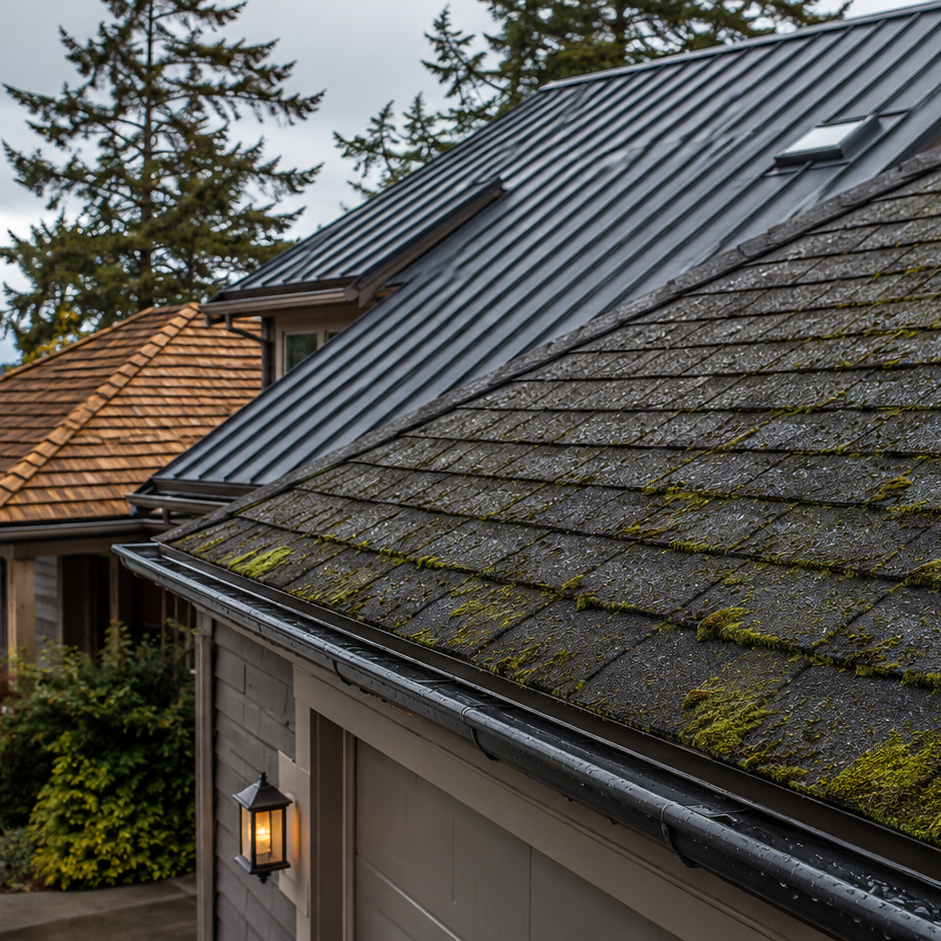
The coastal trade-off is that asphalt is the most moss-prone of the three and generally the shortest-lived in a wet climate. Moss readily takes hold of shingles, and when left unmanaged, shortens their lifespan. Asphalt works well on the coast, but it requires moss management to get the most from it, and it won't match metal in longevity.
Metal Roofing: Long-Lasting and Moss-Resistant
Metal roofing costs more upfront, but it performs well in coastal conditions. It lasts a very long time — far longer than asphalt — sheds water efficiently, and resists moss far better, since moss struggles to take hold on a smooth metal surface. Those qualities make metal a strong performer against coastal rain and moss.
The trade-offs are the higher initial cost and that it's a bigger investment. For homeowners who plan to stay and want a durable, low-moss roof that handles heavy rain, metal's longevity and resistance often justify the price over the long run.
Cedar Shake: Classic Look, More Upkeep
Cedar shake offers something the others can't: a classic, natural wood look with real character that many people love. For the right home and aesthetic, nothing else matches it.
In a wet coastal climate, though, cedar demands the most maintenance. As a natural wood product, it's vulnerable to moisture, moss, and rot, so it needs ongoing care and treatment to withstand constant damp and salt air. Cedar shake can be a beautiful coastal roof, but only for an owner willing to commit to the upkeep it requires here.
| Material | Cost | Lifespan | Moss/coastal resistance | Maintenance |
|---|---|---|---|---|
| Asphalt shingles | Lowest | Solid, shortest of the three | Most moss-prone | Moss management needed |
| Metal | Highest upfront | Very long | Resists moss, sheds water well | Low |
| Cedar shake | Mid-to-high | Good with upkeep | Vulnerable to moisture/moss/rot | Highest |
How to Choose for a Coastal Home
The right material depends on your priorities. Choose asphalt if budget is the main driver and you want a proven, affordable roof, accepting that it needs moss management and won't last as long as metal. Choose metal if you want maximum longevity, low-maintenance, moss- and rain-resistance, and a higher upfront cost fits your plans — it's often the strongest long-term performer in coastal conditions. Choose cedar shake if the natural wood look matters most to you and you're prepared for the higher maintenance it demands in a damp climate. There is no wrong answer; it's about matching budget, lifespan, look, and upkeep to what you want. A roofing professional can walk through how each fits your home and climate and help you decide.
Weigh maintenance honestly, not just upfront cost. On the wet coast, the cheapest roof to install isn't always the cheapest to own — asphalt needs moss management and cedar needs real upkeep, while metal costs more upfront but asks little. Match the choice to how much roof maintenance you'll actually keep up with.
Frequently Asked Questions
There is no single best — it depends on your priorities. Metal lasts the longest, sheds water well, and resists moss, making it strong for coastal rain, but it costs more upfront. Asphalt is the most affordable and widely used, with a solid lifespan, but it's the most moss-prone and shortest-lived of the three here. Cedar shake offers a classic look but needs the most upkeep in a damp climate. Choose based on budget, lifespan, look, and the maintenance you'll do.
Because it's the most affordable, widely available, comes in many styles, and offers a solid lifespan, it's the practical default for many homeowners. On the coast, it works well but has trade-offs: it's the most moss-prone of the three materials and generally the shortest-lived in a wet climate, so it benefits from moss management to get the most out of it. For budget-focused homeowners willing to manage moss, asphalt remains a popular, sensible choice.
It often is for the long term. Metal costs more upfront, but it lasts far longer than asphalt, sheds water efficiently, and resists moss because the smooth surface gives moss little to grab. Those qualities suit coastal rain and damp especially well, and the low maintenance and longevity can justify the price over the years, particularly for homeowners planning to stay. If maximum durability and low upkeep matter to you and the budget allows, metal is a strong coastal choice.
It can, but it demands the most maintenance. Cedar is a natural wood product, so in a wet coastal climate, it's vulnerable to moisture, moss, and rot, and it needs ongoing care and treatment to hold up against constant damp and salt air. For an owner who loves the classic natural wood look and is committed to the upkeep, cedar shake can be a beautiful coastal roof. For one who wants low maintenance, it's the most demanding of the three options here.
Match the material to your priorities: budget, how long you want the roof to last, the look you want, and how much maintenance you'll take on. Asphalt suits a tighter budget with moss management; metal suits those seeking maximum longevity and low upkeep who can pay more upfront; cedar suits those who want the natural look and are willing to commit to maintenance. All three work on the coast. A roofing professional can help weigh how each fits your home, climate, and plans.
Match the Material to Coastal Conditions
Choosing a coastal roof comes down to how each material handles rain, moss, and salt air against your budget, lifespan goals, look, and upkeep tolerance. Asphalt is affordable and common, but the most moss-prone and shortest-lived; metal costs more upfront but lasts long and resists moss and rain with little maintenance; cedar shake offers a classic look but needs the most care in the damp. None is wrong — the best roof is the one whose trade-offs fit your priorities. Weigh them with the coastal climate in mind, and the right material becomes clear.
Re-roofing and weighing asphalt, metal, or cedar? — Get expert guidance and quality installation matched to the coast from a family-run, certified team. 3D Established Roofing serves Nanaimo, Lantzville, Parksville. Call (236) 508-8008.
