
Metal Roofing Near Salt Water — the Coating Goes First
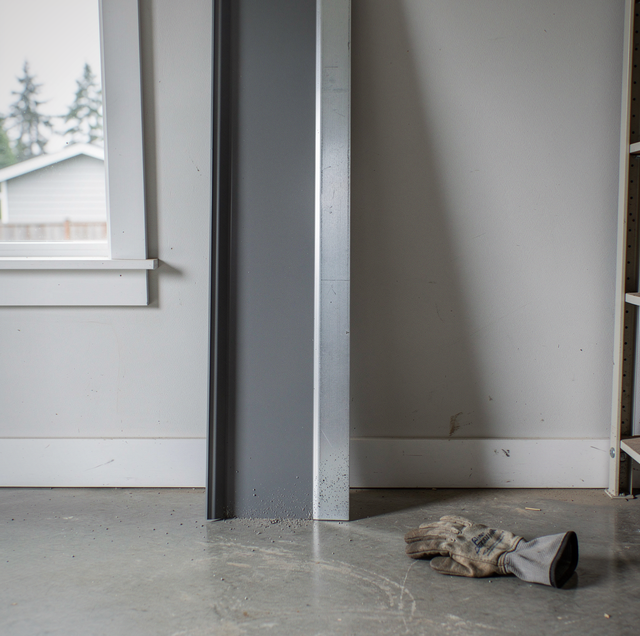
About nine ten-thousandths of an inch of alloy sits on each face of a steel roofing panel, and that layer is the whole barrier between salt and the steel beneath it. The specification for aluminum-zinc alloy-coated sheet sets a common AZ55 designation, calling for 0.55 ounces of coating per square foot, counting both faces, which works out to nearly 0.0009 inches per side. The gauge of the steel and the spacing of the ribs carry wind and snow, and neither of them carries corrosion. Within reach of salt water, that difference shows up as service life, and it is why your panels and a neighbor's, at the same gauge and profile, can be wearing that thin layer of alloy at very different rates.
Coatings Do the Work That the Steel Cannot
A metal roof panel is a laminate. At its middle is a sheet of ordinary carbon steel. Over it goes a hot-dipped metallic coating, either zinc on galvanized sheet or the nominally 55 percent aluminum, 43 percent zinc and 1.6 percent silicon alloy, and over that, on a painted panel, a factory paint film. A manufacturer's technical bulletin on conditions corrosive to these products describes the coating as protecting the steel by more than one route: as a barrier keeping water off it, and galvanically, by corroding in the steel's place wherever that barrier breaks.
The steel inside rusts like any other carbon steel, so nothing about a metal roof is inherently rust-proof, and your panel stays sound for exactly as long as the coating over it lasts. The number that affects how it behaves near saltwater is the coating weight, printed as an AZ designation on the paperwork you were handed, while sheet thickness is a structural figure related to wind uplift and traffic.
Salt Attacks the Oxide Film Before the Metal
Zinc and aluminum last outdoors because each forms a thin oxide layer that slows corrosion beneath. A manufacturer's technical bulletin puts what salt does to that skin plainly: salt water destroys the protective oxide films of aluminum and zinc, making them much more chemically active. Chloride never has to reach your steel to matter, only the film keeping your coating slow.
The other half of it is how long the panel stays wet. Salt aerosol lifts off breaking water, rides the prevailing wind, and settles downwind. Once it is on your roof, it does not stay a dry crystal. Published humidity fixed-point tables put the air over over-saturated sodium chloride near 75 percent relative humidity. Above that, salt on a surface draws water out of the air and becomes brine.
A salted panel spends far more hours wet than a clean one under identical weather conditions, with a film that has already stripped the oxide away. A manufacturer's list of conditions to avoid puts extended wet times, and anything holding moisture against your sheet, alongside the salt itself.
Cut Edges Leave Bare Steel Facing the Weather
Sheet is coated as a continuous coil at the mill, so the coating stops wherever anyone later cuts. Panels get cut to length, cut into a valley, and cut around a vent, and each of those cuts opens a stripe of uncoated steel along an edge.
Galvanic protection covers those edges, and it has a limit. The galvanic series for seawater ranks aluminum and zinc as more active than iron, so at a cut edge the coating corrodes preferentially, and the bare steel beside it is protected while that sacrifice lasts. How far along an edge the protection reaches is finite, and testing on prepainted aluminum-zinc sheet reports edge creep as slight, leveling off after roughly two years. The sites those panels stood on while that was measured were not saltwater sites. The measurement is sound, and it was taken somewhere your roof is not.
Overlaps are the second place a coating gets tested. Water working between your panels carries chloride in and leaves it behind when it dries. Manufacturer coverage excludes failure to drain overlaps freely, and to clear debris from them.
Cutting a panel on the roof leaves saw fines, and loose iron on a wet panel is a second metal touching it, one of the things to keep off a coating.
Rain Only Rinses the Areas It Lands On
Rain is the one thing that washes chloride back off your roof, and it only does so where it lands. Anywhere the weather is blocked, salt arrives on the same schedule as everywhere else and leaves on none of it. The underside of a drip edge and the face tucked under a wide overhang get looked at first, in that order, because one is reachable from a ladder and the other is not.
Debris does the same job by a slower route. Piles of leaves and dust extend the time of wetness on a sheet, and manufacturer coverage excludes soil or vegetation left in contact with the panels. A valley holding needles through your wet winter holds brine against the coating for months on end, while the rest of your roof has been shedding clean.
The Layers That Get Consumed First
The painted face under your hand, on an offcut sitting in your garage, is the only layer of this assembly anyone ever touches, and it is also the first one being spent. Under it sits the metallic coating, and under that the steel. Weather works down through them in that order, and your steel is the last thing it arrives at.
The paint film holds color and gloss and sheds water. The corrosion duty falls on the metallic coating beneath it; given the bare coating's own corrosion resistance, sheet like this is typically painted for appearance on high-slope roofing. A scratch stopping in the paint is cosmetic. A scratch reaching bare steel puts the galvanic sacrifice to work on one spot of your roof, and that spot has to hold for decades.
Some installation guidance for this sheet never reaches the sample board you are shown. Fasteners are meant to be chosen with a life expectancy equal to the panel's; sealants are meant to be neutral cure only, and fasteners should be electrically insulated from the panel with elastomeric grommets, keeping fastener and coating out of metallic contact.
Neutral cure matters because the alternative, acid-cure silicone, is named acetoxy for the acetic acid it gives off while it sets, and a lap joint on your roof holds that against its own coating. It reads as trivia on a product sheet and shows up years later as a stain below a seam.
Frequently Asked Questions
The coating designation is the first line to find, because it is the quantity a sheet maker warrants against. Limited warranty terms for unpainted aluminum-zinc panels step up with coating weight, running 40 years at AZ50 and 50 years at AZ60. If your panels arrive without a designation on the paper that came with them, you have no way to verify what you were sold.
Because water leaving the roof is part of how a coating survives, and a shallow plane holds it instead. Manufacturer coverage excludes a roof or a section of it that has a flatter than a quarter-inch fall per foot. A porch or shed run tied into your steeper main roof is worth asking about, because the panel on it is the same sheet as the rest of your roof while the water behaves differently.
Less well than it looks. The standard salt-spray practice behind those hours explicitly states that the results should not be regarded as a general guide to the corrosion resistance of the tested materials in all environments where they may be used. Take an hours figure you are quoted as a ranking between samples in one controlled fog, rather than as a service life for your roof in your own air.
It can, and sheet makers include these in their exclusions: areas subject to water runoff from lead or copper flashings or piping, and areas in contact with either metal. Copper sits well down the seawater galvanic series from zinc and aluminum, so runoff from a copper flashing lands on a panel more active than itself. Check what your own flashings and vent boots are made of before you assume the panel is the weak part.
No, that brightness is the alloy. Over it goes a thin chemical treatment the mill applies against wet-storage stain, the dark blotching that forms when coated sheet is stacked or coiled damp and air cannot reach it to rebuild the oxide. Aluminum-zinc sheet is treated this way at the mill unless a customer asks otherwise. If your panels reach your site already mottled, raise it with your supplier before they go up.
Warranty terms name a minimum distance for what the water in front of the building does, descending with the salt it throws: 1,500 feet from breaking surf, 800 feet from a large bay, 400 feet from a marsh. Other manufacturer warranties use a single flat 1,500-foot figure, with no separate figure for calmer water. Read your own panel's paper before you assume either number covers your roof.
Book a roof assessment before the panels are ordered — a roofer measures your distance to open water and checks the faces rain never rinses, and the coating weight is specified from those readings. 3D Established Roofing serves Nanaimo, Lantzville, and Parksville. Call (236) 508-8008.
