
How to Spot Storm Damage After a Coastal Wind Event
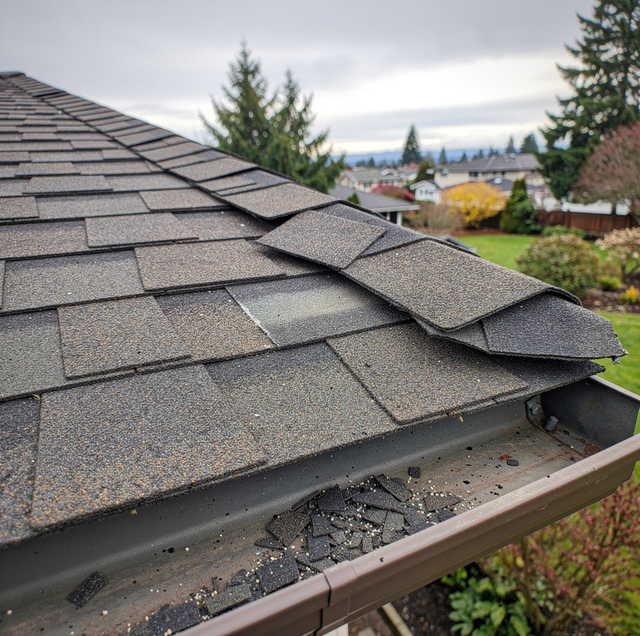
A roof can come through a windstorm looking almost the same as it did the day before and still have real damage working underneath it. Wind rarely tears a roof apart in one obvious motion. More often it lifts a tab a few millimeters, flexes a flashing strip, or knocks loose a run of granules, and none of that reads as urgent from the driveway. Knowing what wind actually does to roofing materials, and where it tends to leave marks, makes the difference between catching a small problem early and discovering it months later as a stain on a ceiling.
What Sustained Wind Does to a Roof
Shingles, membranes, and flashing are all designed to handle wind from a specific direction and speed, with a built-in margin for gusts. A prolonged wind event pushes past that margin in a different way than a single strong gust does. Repeated flexing fatigues the adhesive seal strip between shingle courses the same way bending a strip of metal back and forth eventually weakens it, even if no single flex looks dramatic. Wind that comes from an unusual angle, rather than the direction a roof's overlap pattern was built to shed, can also get underneath edges that were never meant to face into a gust. The result is often a roof with no single point of catastrophic failure but dozens of small stress points that add up across the slope.
Lifted or Missing Shingles
The clearest sign to check for is a shingle that sits at a different angle than the ones around it, even slightly. A tab that has been pried loose from its seal strip will often look like it is casting a shadow the neighboring shingles don't, or like a corner has curled up instead of lying flat. Fully missing shingles are the easier case: they leave a visible gap and exposed underlayment or decking, and they are usually spotted quickly. The harder case is the shingle that lifted, resealed slightly out of position, and now looks almost normal from a distance. Walking the property line and scanning each slope at a low angle, rather than straight up, makes a lifted edge easier to spot because it reflects light differently than a flat one.
Granule Loss on Slopes and in Gutters
Granules protect the asphalt layer underneath from ultraviolet breakdown, and wind-driven rain during a storm knocks loose ones that were already loosely bonded. After a windstorm, granules collecting at downspouts or pooling in gutter runs are a reliable indicator that something on the roof was struck. A small amount of granule loss is normal aging and not cause for alarm on its own. A sudden, heavy accumulation right after a storm, especially concentrated below one section of the roof rather than spread evenly, points to fresh wind or debris damage on that slope specifically and warrants a closer look.
Flashing Displacement Around Penetrations
Flashing around chimneys, vent pipes, and skylights is held down with fasteners and sealant rather than woven into the shingle pattern, making it more vulnerable to wind that gets under an edge. A flashing strip that has been bent, lifted, or partly pulled away from a penetration is one of the more serious finds after a wind event, because it creates a direct path for water at a joint rather than across a flat field of shingles. From the ground, look for a flashing edge that no longer lies flush against the roof surface or a strip that appears to have shifted position relative to the chimney or vent stack it surrounds. Binoculars from a safe vantage point often reveal this more clearly than the naked eye.
Soft Spots and Sagging That Signal Deck Damage
Not every consequence of a wind event shows up on the shingle surface. If wind has been driving moisture under a compromised seal for a while, the plywood or oriented-strand-board decking underneath can begin to soften. From the ground, this rarely looks like anything specific on the roof itself. Inside the attic, though, a flashlight check along the underside of the deck can reveal dark staining, a slightly spongy feel when pressed with a gloved hand, or daylight showing through a seam that should be sealed. A soft spot found this way means the damage has already extended beyond the shingle layer, and it is one of the few checks worth doing indoors rather than from the outside.
Debris Impact Marks and Punctures
High winds carry branches, loose gutter sections, and airborne grit that a calm day would never. Impact marks show up as dented or cracked shingles, small dark bruises where granules have been knocked away in a tight cluster rather than spread evenly, or in more serious cases an actual puncture through to the underlayment. A branch resting on a roof after a storm should be removed carefully rather than dragged, since dragging it across the surface can cause more damage than the original impact did. Bruised shingles are easy to miss because they don't change color dramatically, but a bruise weakens the shingle at that spot, making it more likely to crack or leak during the next storm, even if it holds up fine through the current one.
Why So Much Wind Damage Isn't Visible From the Ground
A ground-level walk-around is a useful first check, but it has real limits. Slope angle, roof height, and the simple fact that most wind damage starts small mean a meaningful share of storm damage on any given roof is invisible from a driveway or yard. A lifted shingle on a back slope facing away from the street, a flashing strip shifted by a few millimeters, or granule loss on a section too high to see clearly with the naked eye can all sit undetected for a full season. Binoculars help extend what a ground check can catch, but they cannot substitute for physical proximity when the concern is a seal strip's integrity rather than its general appearance. This gap between what looks fine from below and what is actually happening on the surface is the main reason storm damage is often discovered only after it has already caused an interior leak.
When a Ground-Level Check Is Enough
For a roof with no visible missing shingles, no granule surge in the gutters, and no interior staining after a wind event, a careful ground-level look plus an attic check is often a reasonable first pass, particularly on a newer roof with a full manufacturer warranty still in force. Photographing each slope right after a storm and comparing those photos to a set taken a season earlier is a simple way to catch gradual changes that memory alone would miss. This kind of self-check has real value, but it works best as a screening step rather than a final verdict, since it can rule out the obvious problems without ruling out the subtle ones.
When to Call a Professional Instead
A closer inspection makes sense whenever any of the ground-level signs above appear, when the roof is older and nearing the end of its expected service life, or when a recent wind event was unusually strong, even if nothing looks obviously wrong. Flashing displacement, in particular, is not a reasonable do-it-yourself repair for most homeowners, since it usually requires removing and resetting shingle courses around the flashing to restore the seal. Walking a sloped roof also carries a real fall risk that a trained inspector can manage with proper footing and safety gear, which is reason enough on its own to hand off anything beyond a from-the-ground look. An inspection that finds nothing is not wasted effort. It is confirmation that a roof came through a wind event intact, which is worth knowing either way.
What a Professional Storm Inspection Actually Involves
A thorough inspection covers more ground than a homeowner walk-around, both literally and in terms of what gets checked. That includes examining each slope up close for lifted or cracked shingles, testing the flashing for movement rather than just looking at it, checking the attic deck from underneath for soft spots and water staining, and reviewing the gutters and downspouts for granule volume as a clue to where impacts were concentrated. Photo documentation at this stage matters for two reasons: it provides a clear record of the roof's condition immediately after the storm, and it supports an insurance claim if the damage proves significant enough to warrant one. Not every wind event that prompts an inspection turns up damage serious enough to need repair, and a good inspection should say so plainly when that's the finding rather than manufacturing a problem to justify the visit.
Frequently Asked Questions
Within the first few days is reasonable for a ground-level look, since granule accumulation in gutters and any obvious lifted shingles are easiest to spot before the next rain washes debris away or further wind resettles a marginal shingle back into place, masking the sign that it moved at all.
Yes. Sustained wind can fatigue a seal strip enough to create a small gap without ever fully detaching a shingle. That gap can admit wind-driven rain for months before enough water has passed through to show as a ceiling stain, which is why an intact-looking shingle field does not rule out an active leak path.
Yes, materially. Seal strips lose adhesive strength as asphalt shingles age, so a roof in the last few years of its expected service life can sustain damage at wind speeds a newer roof of the same product would shrug off without any visible effect.
Hail bruising tends to appear as a scattered, roughly circular pattern across an entire slope because hail falls broadly and evenly, while wind-driven debris impact is usually clustered in one section, often downwind of a tree or structure, because it traces the path of whatever object the wind was carrying.
Loose leaves and small twigs can generally be cleared with a soft broom from a stable ladder position, but a resting branch of any real size should be left for a professional, since removing it can shift weight suddenly and put a foot through an already-weakened section of decking.
Many residential policies cover inspection costs tied to a specific storm event, particularly when the inspection is requested soon after the event and backed up with photos. However, coverage details and any deductible depend entirely on the individual policy, so check the specific terms before assuming coverage is worth the few minutes it takes.
Schedule a storm damage inspection — get a clear, professional read on your roof's condition after high winds. 3D Established Roofing serves Nanaimo, Lantzville, and Parksville. Call (236) 508-8008.
