
Roof Repair or Replacement: What Actually Decides It
The Decision Every Homeowner Eventually Faces
Every roof reaches a point where the question stops being "how do we fix this" and becomes "should we fix this at all." That choice is harder than it looks, because a roof rarely fails all at once. It fails in patches: one bad valley, one lifted ridge cap, one soft spot over the bathroom. The instinct is to treat each problem as its own small job. Sometimes that instinct is right. Sometimes it means paying for the same repair twice and still ending up with a new roof a year later.
A roofer's job in this moment isn't to sell you the biggest possible job. It's to figure out whether the roofing system beneath your visible damage still has years of service left, or whether the damage is a symptom of something the system can no longer withstand. That distinction is what this article is about: the mechanisms that separate a roof worth patching from one that needs to come off.
Why Roof Age Is the Starting Point, Not the Final Answer
Age matters because every roofing material has a rated service life, and asphalt shingles lose their flexibility and their protective granule coating on a predictable curve. But age alone doesn't tell a roofer what to recommend, because two roofs of the same age can be in completely different condition depending on how they were installed, how they've been maintained, and how much sun and moisture exposure they've taken.
Installation quality: A roof with proper ventilation, correctly nailed shingles, and code-appropriate underlayment will often outlast its rated lifespan. A roof with nails driven at the wrong angle, or a deck that was never properly dried in before shingles went down, can develop problems well ahead of schedule.
Exposure: Roofs facing prevailing wind and rain take more punishment than sheltered slopes. In a climate with near-constant moisture and salt-heavy air, fasteners and metal flashing corrode faster than the shingles around them, which is one reason a leak can show up years before the shingles themselves look worn out.
Maintenance history: A roof that's had its valleys cleared, its flashing checked, and its moss treated on a regular schedule tends to age slower than one that's been left alone. Neglect doesn't just shorten a roof's lifespan; it hides the exact point at which repair stops being enough.
What's Happening Underneath: Decking, Underlayment and Structural Health
The part of a roof most homeowners never see is usually the part that decides the repair-or-replace question. Shingles are the weather-facing layer, but they sit on a system: underlayment (felt or synthetic, plus ice-and-water membrane at eaves and valleys), then the decking, typically plywood or OSB sheathing, then the rafters or trusses underneath.
When decking is sound: Localized leaks, damaged flashing, and isolated shingle loss can usually be repaired without disturbing the decking. A roofer removes the damaged section, checks the underlayment, and replaces only what's compromised.
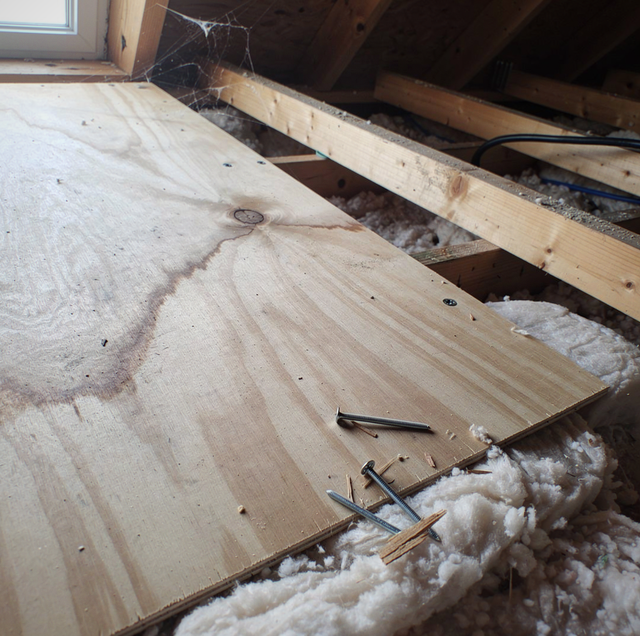
When decking has taken on water: Sustained leaks eventually soak into the sheathing. Wet OSB delaminates and loses its ability to hold a nail; wet plywood softens and can sag slightly between the rafters, something a roofer can spot by pressing gently on the deck from inside the attic near a leak point, never by walking on the roof itself. From the outside, curled or cupped shingles over the same area feel almost like cardboard left out in the rain, stiff in some spots and soft in others, when a roofer checks them. Once decking has degraded, patching the surface layer without replacing the sheathing underneath merely covers up a structural problem rather than solving it.
This is why a roofer's inspection focuses as much on the attic as it does on the surface. Water stains on rafters, damp insulation, and daylight visible through the roof deck are all signs that the damage has moved past the shingles and into the structure itself, which changes the calculation from repair to replacement even if the visible shingle damage looks minor.
Signs Pointing Toward Repair
Your roof is usually a good candidate for repair when the damage is contained, the surrounding materials are still flexible, and the underlying deck is dry. Common repairable issues include:
Isolated flashing failure: Step flashing around a chimney or wall, or the counter-flashing tucked into the masonry above it, can corrode or work loose without the surrounding shingles being affected. Replacing flashing alone often solves a stubborn leak.
A single storm-damaged section: Wind-lifted shingles, a few cracked or torn shingle tabs, or hail bruising confined to one slope can typically be patched with matching material, especially on a roof still within its expected service window.
Skylight leaks: A leaking skylight is frequently a flashing or sealant failure at the perimeter rather than a problem with the roofing field around it, and can often be resolved by re-flashing the skylight curb without touching the rest of the roof.
Clogged or damaged roof valleys: Debris buildup in a roof valley can back water up under shingles and mimic a much bigger problem. Clearing the roof valley and replacing the valley flashing frequently resolves what looked like a serious leak.
Signs Pointing Toward Replacement
Replacement becomes the sounder recommendation when the damage is spread across your roof, or when it points to a system that's worn out rather than locally broken.
Widespread granule loss: Granules protect shingles from UV breakdown. When they're gone across large sections, exposed asphalt dries out and cracks faster everywhere at once, not just where the damage is currently visible.
Shingle lift and curling across multiple slopes: Curling at the edges or cupping in the middle means the shingle's asphalt base has lost its oils and flexibility. Once this shows up broadly rather than in a single patch, it signals that the whole batch is reaching the end of its service life together.
Repeated leaks in different locations: A pattern of new leaks appearing in different spots each season, rather than the same spot recurring, usually indicates the underlayment itself is failing rather than a single flashing detail.
Moss and algae established across the roof: Moss and algae thrive on damp, shaded roofing in wet climates, and heavy growth traps moisture against the shingle surface, accelerating the same granule loss and curling described above. Light growth can be treated and cleaned; growth that's worked its way under shingle tabs across large areas is a sign the roof has been retaining moisture for a long time.
Repair vs. Replace at a Glance
| Signs That Favor Repair | Signs That Favor Replacement |
|---|---|
| Leak traced to one flashing detail (chimney, skylight, valley) | Leaks recurring in different, unrelated locations |
| Shingle damage confined to one slope or section | Curling, cupping, or granule loss spread across most of the roof |
| Decking underneath the damage is dry and firm | Soft, spongy, or delaminating decking discovered during inspection |
| Roof is within its expected service life for its material | Roof has reached or passed its material's typical service life |
| Isolated storm damage on an otherwise sound roof | Storm damage layered on top of already-worn shingles or membrane |
| Moss or algae limited and surface-level | Moss and algae established under shingle tabs across large areas |
Flat and Membrane Roofs Follow a Different Calculus
Commercial and flat roofs, typically finished with a membrane system such as TPO or EPDM rather than shingles, fail differently than a sloped asphalt roof, so the repair-or-replace decision hinges on different signs.
Ponding water: Flat roofs rely on slight slope and functioning drains to move water off the surface. Ponding that sits for more than a day or two after rain accelerates membrane breakdown at that spot and can eventually work its way through seams. Isolated ponding near a clogged drain is often a drainage fix rather than a roof replacement; ponding across large areas usually means the roof's slope or insulation has settled and shifted, which is a structural issue the membrane alone can't solve.
Seam and flashing integrity: Membrane roofs depend on their seams and perimeter flashing staying fully bonded. A lifted seam in one area can typically be re-welded or re-sealed. Seams failing in multiple locations point to a membrane that's reached the end of its adhesion life.
Membrane thinning and blistering: Sun and temperature swings cause membrane material to expand and contract repeatedly, and over years this stresses the material until it thins, blisters, or cracks. Scattered blistering can be patched; a thin, brittle membrane across the field is a replacement signal.
Gutters, Flashing and the Small Parts That Change the Verdict
Some of the factors that determine a repair-or-replace call aren't roofing materials at all; they're the metal and drainage details around the edges. One-piece aluminum gutters, drip edge flashing, and roof valley metal all work together to move water off the roof and away from the fascia and foundation. When these parts fail, they can cause damage that looks like a roofing problem but isn't one.
Fasteners and exposed metal corrode faster in damp, salt-heavy air, which is why flashing and gutter hangers sometimes need attention well before the shingles or membrane around them show any wear. Sagging or leaking gutters can send water back under the drip edge, staining fascia boards and soaking the roof edge in a way that mimics shingle failure. In many of these cases, replacing or resealing the gutter system and drip edge resolves what looked at first like a roofing problem, and the roofing material itself never needed to be touched.
Maintenance Programs Change the Math Over Time
A roof you keep on a regular maintenance schedule (valleys cleared, flashing checked, moss treated, minor issues caught early) tends to stay in repair territory longer than a roof that's never been looked at between installation and the day a leak shows up inside the house. Fluctuating temperatures stress every roofing material through repeated expansion and contraction, whatever the season, and small issues left unaddressed compound over the years into the widespread damage described above. Catching a lifted shingle or a cracked pipe boot early is a small repair; leaving it through several seasons of freeze-thaw and heat cycles can turn it into deck damage that forces a full section, or the whole roof, into replacement.
Frequently Asked Questions
Most single-issue repairs, such as reflashing a chimney or replacing a section of damaged shingles, are completed in a few hours to a full day, depending on access and weather conditions. A full tear-off and replacement generally takes several days, from the removal of old material to the final inspection.
Yes, but roofers generally advise against patching the same roof more than two or three times over its life. Beyond that point, the cost of repeated call-outs and materials starts to outweigh the protection those patches provide, since the surrounding shingles are aging toward failure anyway.
A partial re-roof works well when the sections are structurally separate, such as a garage roof versus the main house. Within a single continuous roof plane, it's rarely a clean fix, because shingle color lots vary between manufacturing runs and a new section will visibly mismatch the old one.
Blocked soffit vents or a missing ridge vent trap heat and humidity against the underside of the deck. That trapped moisture can accelerate shingle deterioration from underneath, sometimes shaving years off a roof's working life even when the shingles still look serviceable from the outside.
Insurers generally cover replacement when damage is traced to a specific storm or impact event, confirmed shortly after it occurs, not gradual wear from age or exposure. A roof that's reached the end of its service life typically falls to the homeowner to repair or replace without insurance involvement.
An overlay is only an option when there's already one layer of shingles down, and most manufacturers won't extend a full material warranty for an overlay installation. It also hides the deck from inspection, so any sheathing damage underneath goes unaddressed rather than repaired.
Summary: Roofs rarely fail on a schedule, which is exactly why your repair-or-replace question deserves an actual inspection rather than a guess based on age or a single visible leak. Deck condition, flashing integrity, granule loss, and drainage are what separate a roof with years left from one that's quietly asking to be replaced. A roofer who checks all of them before recommending either option is doing the job right.
Book a roof inspection — get a clear repair-or-replace recommendation backed by 50-year material and 15-year labor warranties. 3D Established Roofing serves Nanaimo, Lantzville, and Parksville. Call (236) 508-8008.
