
Signs of a Roof Leak Before It Reaches the Ceiling
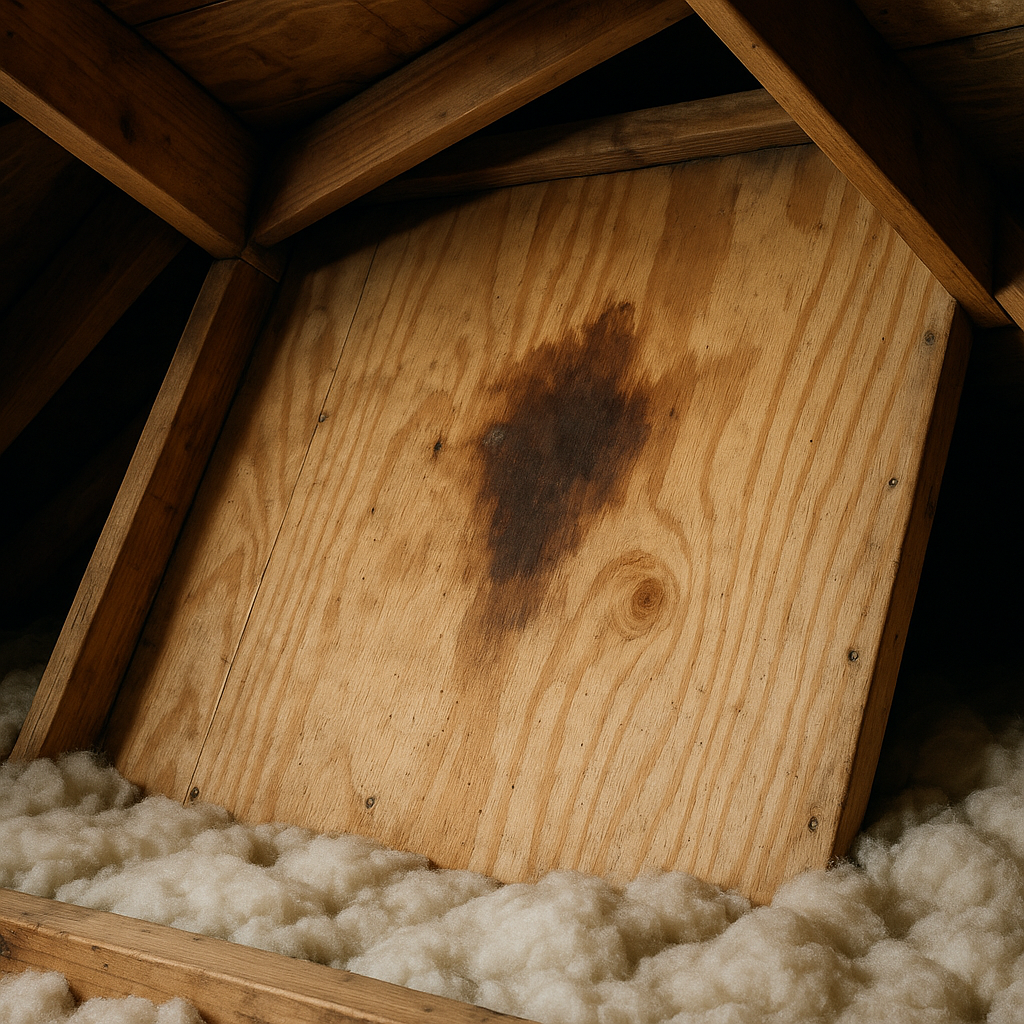
A brown ring on the ceiling is the roof leak most homeowners recognize, yet it is one of the last signals a leak sends. Water finds its way through the roof, then soaks for a while before enough collects to darken the drywall below. Wait for that ring, and you are meeting the leak near the end of its story, after it has worked through parts of the roof you cannot see from the couch. The earlier signals are quieter, and most live in the attic and along the edges of a room rather than in the middle of the ceiling.
Where the Water Goes First
When water breaches the roof, it lands on the roof decking, the sheet of plywood or oriented strand board the shingles are nailed to. Bare wood and the attic insulation packed against it both readily absorb moisture, so the first arrivals spread sideways along the grain rather than drip straight down. A leak can wet a wide patch of sheathing and soak a run of insulation before a single drop reaches the finished ceiling. That is why a ceiling stain reads as a late sign: the structure above has been holding water for a while by the time the drywall gives it up.
The Early Warning Signs You Can Actually Catch
A handful of small clues tend to show before any ceiling patch does, and none of them require getting on the roof.
Faint discoloration is often the first: a small stain or ring, brown, yellow, or rust-tinted, appearing where a wall meets the ceiling or in a corner rather than out in the open. Bubbling, blistering, or peeling paint along those same edges is another early tell, since moisture behind the coating lifts it before it soaks through as a stain. A musty smell that strengthens after rain points to trapped moisture even when nothing is visible. And a slight sag, softness, or warp in the ceiling or wall material can flag moisture in the board before the surface discolors.
You can also read the roof from the ground. Shingle granules collecting in the gutters or at the base of downspouts mean the shingles are shedding their protective surface and wearing thin, often where water starts getting in. Shingles that look lifted, curled, or missing tabs mark the same weak spots. The most direct check, though, is the attic after a rainstorm, covered next.
| Early sign | What it points to |
|---|---|
| Faint stain or ring at a wall/ceiling edge | Moisture starting to bleed through |
| Bubbling or peeling paint at the edges | Water lifting the finish from behind |
| Musty smell that worsens after rain | Trapped moisture in the structure |
| Granules in the gutters | Shingles wearing thin |
| Damp sheathing or matted insulation in the attic | A leak at or near its source |
What to Look for in the Attic After Rain
Head up within a day of a good rain, with a flashlight, and check the underside of the roof rather than the floor. Damp or darkened sheathing is the clearest sign, especially when a patch is wetter than the surrounding wood. Feel the insulation near that spot; wet or matted-down insulation holds water long after the rain stops. Look along the rafters for water trails, the thin snaking stains that mark a drip's path. Check the nail tips poking through the sheathing: rust on those points means moisture has been reaching them repeatedly, a record of a recurring leak. And daylight through the roof marks a spot where water can get in.
Trace any wet mark uphill. Water rarely enters directly above the stain it leaves; it lands higher, runs down the decking or along a rafter, and drips off wherever the slope lets go, so the entry point usually sits above and to the side of what you found.
The Spots Where Leaks Usually Start
Most leaks begin where the roof is interrupted rather than in a healthy shingle field. Flashing, the metal that seals the joints around chimneys, in the valleys where two roof planes meet, and around vents and pipes, is the usual first offender, because its sealant ages and the metal can lift or corrode. Worn, curled, or lifted shingles are the other common culprit, letting wind-driven rain get underneath. Knowing these origins helps you aim an attic check: follow a wet trail toward the nearest chimney, valley, vent, or pipe, and you are usually in the right neighborhood.
Why a Wet Climate Keeps a Small Leak Working
In a wet climate where rain is frequent and the air stays damp, a small leak has a hard time drying out. In a dry climate, a minor breach might wet the sheathing during one storm and dry out before the next, which slows the damage. Where the moisture soaking the decking and insulation gets no chance to dry between storms, a small leak stays wet and keeps feeding the wood and insulation around it. Airborne salt in a salt-air environment adds to it by corroding fasteners and metal flashing, opening the very entry points that leaks favor. Because the wet is year-round rather than a passing season, checking the attic after storms and reading the early edge-and-gutter signs matter more in a damp climate than in a drier one.
Reading the Signs Before the Ceiling Does
A roof leak leaves a trail of small signals before it stains the ceiling: a faint ring at a wall edge, paint lifting at the corners, a musty smell after rain, granules in the gutters, and damp sheathing or matted insulation in the attic. Caught at that stage, a leak usually requires a small repair to a single flashing or a few worn shingles. Left until water drips through the drywall, the same leak has often had time to rot decking, ruin insulation, and grow mold. The habit worth keeping is a flashlight check of the attic after heavy rain and a glance at the gutters and wall edges the rest of the time, so the roof tells you where it needs help while the fix is small.
Frequently Asked Questions
Water rarely drops straight down. Past the shingles, it clings to the decking or a rafter and follows the pitch, sometimes running several feet before it drops. A stain by your bedroom window can trace to a failure over the hallway, which is why patching the drywall fixes nothing. Follow the framing upslope to the highest damp point instead.
Step only on the joists or on boards laid across them, never on the insulation, which will not hold you. Hold the flashlight low and almost flat to the sheathing, since active water throws back a glint that a straight-on beam misses. Go up after a wind-driven rain, not just any shower, and outline any damp patch with a pencil to see if it grows after the next storm.
A stain can come from the flashing where the roof meets a wall or dormer, from a skylight whose perimeter seal has aged and shrunk, or from failed caulk around a wall penetration. Siding and trim above the leak can channel rainwater into the wall cavity, mimicking a roof problem. Trace the moisture to its source before blaming the roof, since the fix varies by source.
It can. An attic with weak ventilation traps warm, damp air, and when it meets a cold roof deck, the air condenses, sometimes freezing into a frost that later melts and drips like a leak. The tell is a broad, even dampness across the deck rather than a trail to one spot, worst on cold, still nights rather than during rain. Check that the soffit and ridge vents are clear before hunting for a hole; in a damp climate, this trapped moisture feeds rot and mold, too.
Scan the flashing around the chimney, along the valleys, and where the roof meets a wall for lifted or gapped metal. Study the rubber collars on the plumbing vent boots, the short pipes poking through the roof, since those collars crack with age and are easily missed. Check the gutters too, since a clogged one can back water under the shingles.
Call a roofer when the trail leads to something structural, when you see active daylight, spreading rot, or mold, when the same stain returns after you thought it was handled, or when the source sits somewhere you cannot reach safely. In a wet climate, a leak does not pause between storms, so an inspection while the damage is small beats waiting.
If you have spotted an early sign of a roof leak, we can find the source and fix it before it reaches your ceiling. 3D Established Roofing serves Nanaimo, Lantzville, Parksville. Call (236) 508-8008.
