
Flat Roof Holding Puddles? Why Standing Water Is a Real Risk
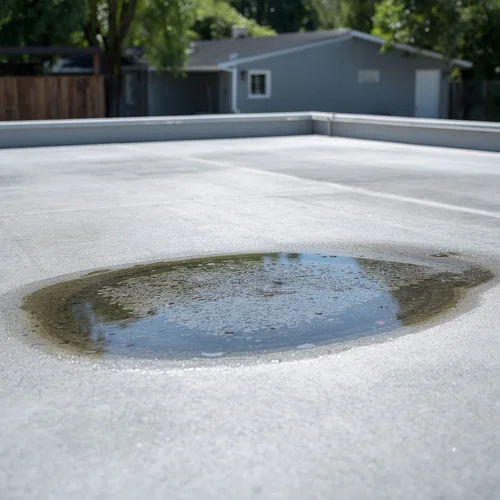
Quick Answer: A flat roof ponds water when it can't drain properly — usually because the slope is too shallow or missing, the drains, scuppers, or gutters are clogged or poorly placed, or the roof has settled and developed low spots over time. A "flat" roof is actually built with a slight slope to shed water; when that fails, water pools instead of draining. Standing water matters because it stresses and degrades the roof, finds weak points, and leads to leaks, especially in a wet climate where it sits often. Fixing it means restoring drainage and addressing low spots.
A flat roof with puddles sitting on it after the rain looks like it's just doing what flat roofs do — but it isn't. Even a "flat" roof is meant to drain, and water that ponds and lingers is a sign that something isn't working. On the wet coast, where rain is frequent and heavy, standing water gets plenty of chances to do damage. Understanding why a flat roof ponds and why that standing water is a real risk explains why it's worth addressing rather than ignoring.
A "Flat" Roof Isn't Actually Flat
The first thing to understand is that flat roofs aren't truly flat. They are built with a slight, deliberate slope — just enough pitch to move water toward drains, scuppers, or gutters and off the roof. That subtle slope is what keeps a flat roof from holding water. So when water ponds and stays, it means that drainage design has failed somewhere: the slope isn't moving water, or the water has nowhere to go. Ponding is defined by water that lingers rather than draining off in a reasonable time, and it always traces back to a drainage problem of some kind.
Why Flat Roofs Pond
Poor or Insufficient Slope
If the roof was built with too little slope, or none in spots, water has no push to move toward the drains and simply sits. A slope problem from the start means the roof never drained well. This is a common root cause of ponding.
Drainage Problems
Even with an adequate slope, the water needs a clear path off the roof. Drains, scuppers, and gutters that are clogged with leaves and debris — common in a treed coastal setting — or that are poorly placed or undersized, can't carry water away, so it backs up and pools. Blocked or inadequate drainage is a frequent and often fixable cause.
Settling and Low Spots
Over time, a flat roof can settle or sag in places, creating low spots where water collects. The deck or structure shifts, the insulation compresses, and a dip forms that holds water even though the rest of the roof drains. These developed low spots are a common reason a roof that once drained fine starts ponding.
| Cause | What's happening |
|---|---|
| Poor/insufficient slope | Water has no push toward drains |
| Clogged drains/scuppers/gutters | Water can't exit, backs up and pools |
| Poorly placed/undersized drainage | Water isn't carried away fast enough |
| Settling and low spots | Dips form that hold water |
Why Standing Water Is a Risk
Ponding isn't just unsightly — standing water actively works against a flat roof, and that's the real reason to address it. Water that lingers stresses the roofing material and accelerates its breakdown, finding weak points, seams, and any small flaw and working its way in. Over time, persistent ponding leads to leaks, accelerates roof degradation, and shortens its life. The added weight of pooled water is a load the roof carries repeatedly. In a wet coastal climate, where rain is frequent, a flat roof that ponds spends a lot of its life under standing water, which compounds the damage. So ponding is both a symptom of a drainage problem and a cause of further roof deterioration.
Persistent ponding on a flat roof is a sign to act, not ignore. Standing water degrades the roofing, seeks out weak seams, and leads to leaks over time, and the repeated weight is a load the roof wasn't meant to hold continuously. In a wet climate it sits often, so address ponding before it causes interior leaks and structural damage.
How It Gets Fixed
Because ponding is a drainage failure, the fix targets drainage and the low spots. If clogged or inadequate drains, scuppers, or gutters are the cause, clearing and correcting them so water can exit is the first step — and keeping them clear of coastal leaves and debris going forward. If the slope is insufficient, the roof may need work to restore proper drainage toward the outlets. If settling has created low spots, those areas need to be addressed so water no longer collects there. The right fix depends on which cause is at play, and on a flat roof, those causes can overlap, so a professional assessment is the reliable way to identify what's driving the ponding and correct it before standing water turns into leaks and deterioration.
Frequently Asked Questions
No. Although they are called flat, these roofs are built with a slight slope specifically to shed water toward drains, scuppers, or gutters. Water that ponds and lingers rather than draining off means drainage is failing — due to insufficient slope, blocked or inadequate drainage, or low spots that have developed. So standing water isn't normal; it's a sign of a drainage problem that's worth addressing, especially because standing water degrades the roof and can lead to leaks over time.
Because the roof isn't draining the water away. The usual causes are a slope that's too shallow or missing, so water has no push toward the drains; clogged drains or gutters with leaves and debris, so water can't exit; or low spots from settling where water collects. Any of these leaves water sitting on the roof instead of running off. Pooling is a symptom of drainage failure, and identifying the cause is the key to fixing it.
Yes. Standing water stresses and degrades the roofing material, accelerates its breakdown, and seeks out seams and weak points where it can work its way in, leading to leaks over time. The repeated weight of pooled water is also a load the roof carries repeatedly. In a wet climate where ponding happens often, this damage compounds. Persistent ponding both signals a drainage problem and actively shortens the roof's life, which is why it shouldn't be left unaddressed.
Low spots usually develop over time as the roof settles or sags in places — the deck or structure shifts, insulation compresses, and a dip forms that holds water even when the rest of the roof drains. These developed low spots are a common reason a flat roof that once drained well starts ponding. Because the dip collects water that can't drain out, it becomes a persistent ponding spot that needs to be addressed so water no longer pools there.
The fix depends on the cause. If clogged or inadequate drains, scuppers, or gutters are the problem, clearing and correcting them restores drainage, and keeping them clear prevents recurrence. If the slope is insufficient, the roof may need work to restore proper drainage toward the outlets. If settling has created low spots, those areas need to be corrected so water no longer collects. Since causes can overlap on a flat roof, a professional assessment identifies what's driving the ponding and fixes it properly.
Get the Water Moving Again
A flat roof ponds water because its built-in drainage has failed — too little slope, blocked or inadequate drains and gutters, or low spots from settling. Since even a flat roof is designed to shed water, ponding is always a sign that something isn't draining. And standing water is more than a puddle: it degrades the roof, exposes weak seams, and causes leaks, especially in wet climates where it often pools. Address the drainage and low spots and ensure the roof sheds water the way it's meant to, rather than slowly being damaged by it.
Water pooling on your flat roof after the rain? — Get the drainage assessed and corrected before it leaks, by a family-run, certified roofing team. 3D Established Roofing serves Nanaimo, Lantzville, Parksville. Call (236) 508-8008.
