
Seamless Gutters vs. Sectional: Which Actually Holds Up?
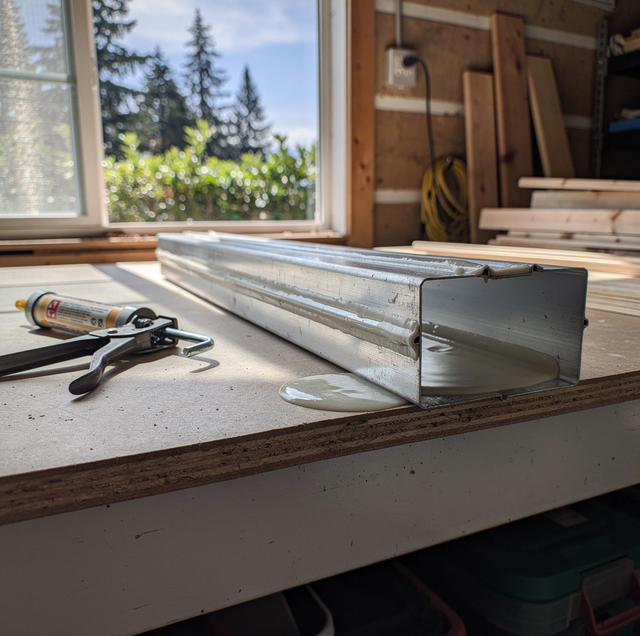
Quick Answer: Sectional gutters are built from pre-cut lengths, commonly 10-foot or 20-foot stock pieces, joined end-to-end with seams sealed with compound, rivets, or slip connectors. Seamless gutters are formed on-site from a continuous roll of aluminum coil fed through a portable roll-forming machine, producing a single length cut to fit the exact run of the wall, with joints only at corners, end caps, and downspout outlets. Fewer joints mean fewer places for sealant to fail, which is the main reason one-piece systems tend to leak less and last longer than sectional runs built from the same grade of metal.
When a gutter system needs replacing, the real decision usually isn't about color or brand. It comes down to how the metal was joined together in the first place: cut into short lengths and pieced together on site, or run out in one continuous piece with no joints along the way. That single manufacturing choice, sectional versus continuous-run, ends up deciding how many places the whole system has to fail.
How Sectional Gutters Are Built
Sectional gutter stock is stamped and formed at a factory into fixed lengths, then shipped to a supply house where an installer buys what the job needs. On site, those pre-cut pieces get trimmed to rough length and joined end to end, either with a slip-joint connector, a riveted overlap, or a bead of gutter sealant spanning the gap between two pieces. A single 40-foot run built from 10-foot stock needs at least three of these mid-run joints before you even count the corners and the outlet where the downspout attaches.
Why the joint matters more than the metal: The aluminum or steel itself is rarely the weak point in a sectional system. The sealant bridging each joint is doing work the metal cannot do on its own, and that compound is the part exposed to sun, rain, and constant expansion and contraction as temperatures swing through the day.
How Seamless Gutters Are Built
A one-piece system starts as a flat coil of aluminum, not a pre-cut length. A technician brings a portable roll-forming machine to the property, loads the coil, and feeds it through a series of rollers that bend the flat stock into the gutter's profile as it comes out the other end. The machine cuts the formed metal to match the exact run of wall it's being installed on, whether that's 18 feet or 55 feet, with no mid-run joint anywhere along that length. The only places a continuous run still needs a seal are the corners, where two lengths meet at an angle and are mitered and joined by hand, the end caps that close off each end, and the outlet cut into the trough for the downspout.
What the continuous-run claim doesn't mean: It doesn't mean zero seams anywhere on the house. A typical single-story home might have four to six corner joints total across its entire gutter system, compared with a dozen or more mid-run seams a sectional system would need to cover the same footprint. The word describes the long straight runs, not the whole roofline.
Why Every Seam Is a Future Leak Point
Gutter sealant is built to move with the metal, but it doesn't move forever. Heat softens it, cold stiffens it, and years of that cycle dry the compound out until it shrinks, cracks, or separates from one side of the joint. Once that happens, water finds the gap and starts dripping instead of flowing to the downspout. A sectional gutter has that failure built into its design from day one: every mid-run joint is a spot where the system depends on a sealant bead outlasting the metal around it. A continuous run removes most of those spots simply by never creating the joint in the first place; there's less sealed surface for the weather to work on over the years.
A sectional gutter behaves the way a fence built from separate rail sections does, sound as long as every joint holds, but a single failed connection lets movement work its way in and spread to the next section. A continuous run is closer to a single length of drainpipe bent to the shape of the wall, with no joint partway along its length to give out.
Sectional vs. Continuous-Run: Side by Side
| Feature | Sectional | Continuous-Run |
|---|---|---|
| How it's made | Pre-cut lengths formed at a factory | Formed on site from coil stock to the exact run |
| Seams per average run | Multiple mid-run joints, plus corners and outlets | Corners and outlets only, no mid-run joints |
| Where the work happens | Cut and joined on site from stocked pieces | Rolled and cut on site with a portable forming machine |
| Typical failure point | Sealant at mid-run joints | Corner miters and outlet connections |
| Off-the-shelf availability | Sold in stock lengths at supply stores | Requires a roll-forming machine and a trained installer |
| Repair approach | An individual damaged section can be unclipped and swapped | A damaged stretch is usually cut out and a new formed piece spliced in |
Material Fit and Custom Runs
Because a one-piece system is formed to the property rather than sold as generic stock, the installer measures the actual run first, and the machine produces metal to match it, corner to corner. That precision reduces the overlap and trimming that a sectional install often requires to make stock lengths fit an odd-shaped roofline. It also means the trough profile remains a single consistent piece around dormers, porch returns, and other breaks in the roofline, where sectional systems tend to add extra joints just to follow the shape.
Where Sectional Still Has a Place
A continuous run isn't the right call for every situation. A short run over a small porch or a single-story addition may only need one stock length, so the seam count barely matters either way. Sectional stock is also what most supply stores keep on hand, which makes it the practical option for a homeowner doing a quick DIY replacement on a small section rather than scheduling a contractor with forming equipment. And when only one section of an otherwise sound gutter has failed, sectional-style repair, unclipping the bad piece and dropping in a new one, is often the faster fix regardless of what the rest of the system is made from.
Installation Day Differences
The two systems play out differently on the day of the work. A continuous-run install depends on getting the measurement right before the coil goes through the machine, since the formed length can't simply be exchanged for a different size the way a stock piece can. A sectional install has more built-in flexibility if a measurement is slightly off, since another stock length can be added or trimmed on the spot. Both systems still need the corners, end caps, and outlets sealed and fastened by hand once the main lengths are in place; that part of the job doesn't disappear just because the gutter field has no seams.
What This Means Over the Life of the System
The maintenance routine differs based on how many sealed joints are in play. A sectional system warrants a walk-along inspection of every mid-run seam at least once a year, since any one of them could be next to dry out and separate. A one-piece system narrows that check to the corners, end caps, and outlet connections, plus the hangers that hold the trough to the fascia, since those are the parts still doing sealed work. Either system still depends on the hangers, the pitch, and clear downspouts to actually move water off the roof edge and away from the fascia and foundation; the seam count changes how often something needs resealing, not whether the basic mechanics still apply.
Frequently Asked Questions
No. The trough itself is one continuous piece along each straight run, but every corner where two runs meet at an angle is still mitered and sealed by hand, as are every end cap and downspout outlet. A typical single-story home might have four to six of these corner and outlet joints in total across the whole system, compared with a dozen or more mid-run seams a sectional system would need to cover the same layout. The continuous-run term describes the long runs, not the entire gutter.
A shallow dent that hasn't broken the metal can sometimes be worked back out with a rubber mallet from underneath, without cutting anything. A crack or an actual puncture is different: the damaged stretch gets cut out, and a new piece of coil-formed stock is spliced in with a sleeve connector sealed on both sides, which reintroduces two seams at that one spot. So a one-piece system can be repaired, but a real breach in the metal requires a joint to be brought back into that section.
Sectional stock is commonly stamped from around .019-inch aluminum, the standard thickness supply stores keep on hand. Continuous runs are more often formed from heavier .027-inch or .032-inch coil, since the metal is being custom-formed anyway and the added thickness resists denting from a ladder, a dropped branch, or hail better than the thinner stock. Gauge varies by manufacturer and region, so it's worth asking an installer which thickness their machine runs.
Both systems commonly use either a 2-by-3-inch or a 3-by-4-inch downspout, and that choice matters more than which gutter system it's attached to. A 3-by-4 downspout moves meaningfully more water off the same length of gutter than a 2-by-3, so a continuous run with no mid-run leaks can still overflow in heavy rain if it's paired with an undersized downspout for the roof area it drains.
A sectional aluminum gutter often needs seam attention somewhere in the 10-to-15-year range and full replacement by around 20 years, driven mainly by how many joints have dried out rather than the metal wearing through. A one-piece aluminum system, kept clear of debris and with its corners maintained, commonly reaches 20 to 25 years before replacement, since there's no mid-run seal competing to fail first. The aluminum panel itself doesn't have a fixed expiry; joint failure is usually what ends a gutter's service life first.
Yes, and this is one place the continuous-run style has an edge in selection. The coil stock comes pre-finished with a baked-on enamel, available in a wide range of factory colors, selected before the coil ever goes through the roller, so the installer can closely match trim or siding. Sectional stock is typically limited to whatever handful of colors a supply store keeps in stock, which narrows the match options for a homeowner trying to coordinate with existing paint.
Ask about switching to seamless gutters — replace a patchwork of sectional seams with one continuous run built to fit your roofline. 3D Established Roofing serves Nanaimo, Lantzville, and Parksville. Call (236) 508-8008.
